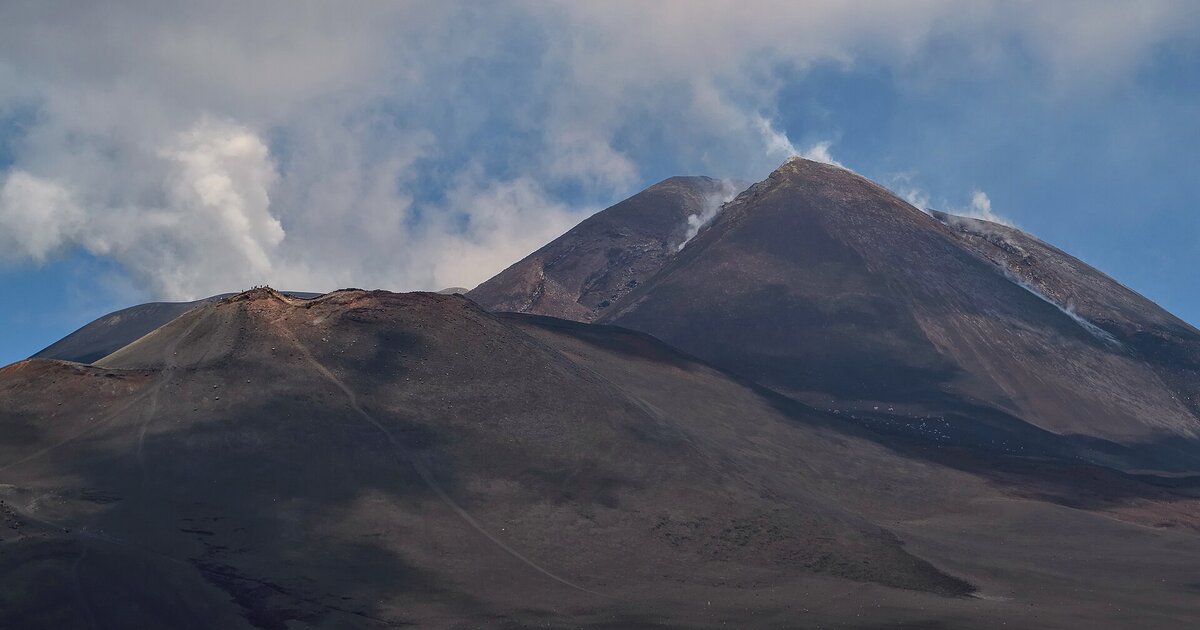
You've just arrived in Catania, Sicily, and there's a dark silhouette on the horizon calling out to you. That's her: Etna, the volcano that towers over the city and that becomes, almost always, the first excursion every guest at Lavika Loft asks me to organise.
I completely get it. Walking on the flank of an active volcano is one of those experiences that stays with you, and the best part is you don't need to be a seasoned climber to live it. In fact, the vast majority of people who climb Etna every day have never done any serious trekking in their lives. In this guide I'll explain everything you need to know to set off with peace of mind: how to get there, what to bring, how much it costs and how far you can push without any risk.
Etna in brief: the facts you need
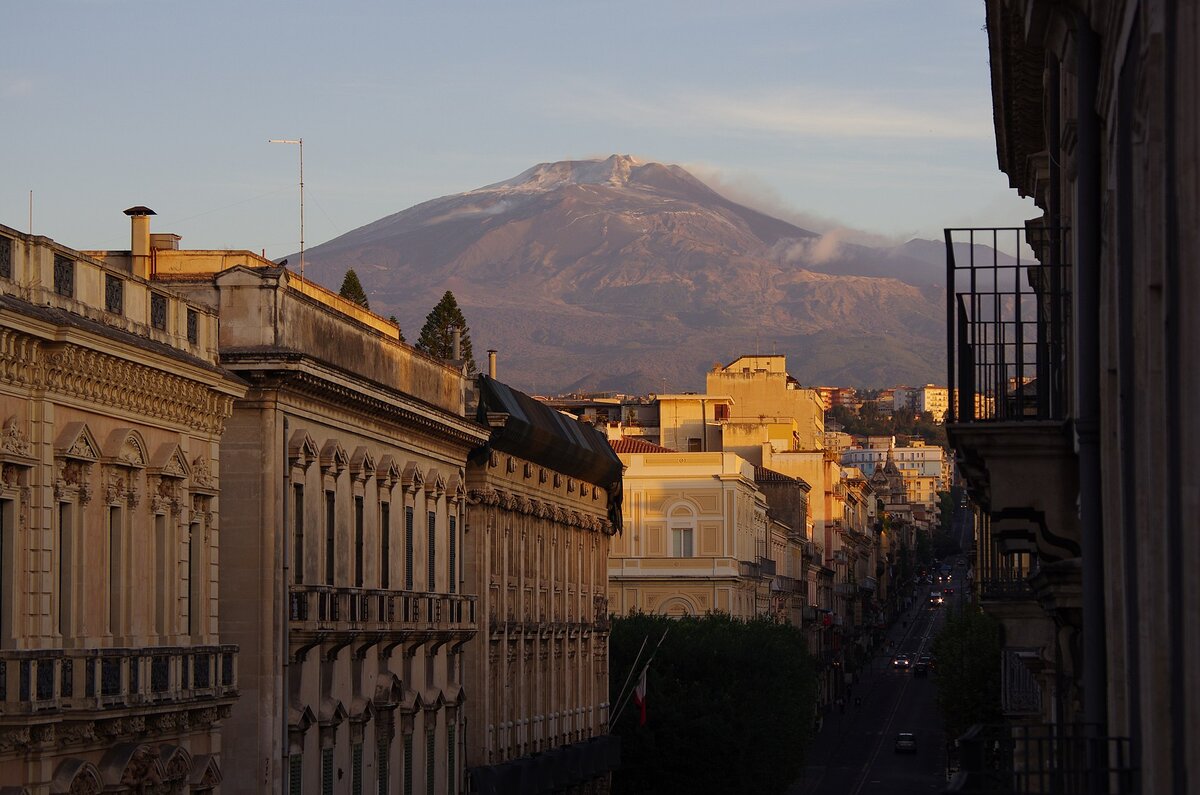
Before setting off, a couple of numbers to frame the mountain. Etna is the highest active volcano in Europe, standing at around 3,300 metres (the exact height changes year to year, because eruptions keep reshaping it). Since 2013 it has been a UNESCO World Heritage Site, and that's no accident: it's one of the most studied and monitored volcanoes in the world.
I know the word "active" can be a little scary. The short answer is this: yes, Etna erupts often, but it's kept under constant watch by seismographs, cameras and satellites, and the areas open to visitors are closed at the first sign of danger. The most spectacular eruptions, the ones you see in videos, usually come from the summit craters, well above the areas where ordinary people walk.
The point of reference for almost every visitor is Rifugio Sapienza, at about 1,900 metres on the southern slope. It's a large square with bars, restaurants, souvenir shops and the cable car departure station. Most excursions start from here, including the easy and free ones. Keep it in mind, because everything you read below revolves around this spot.
How do you get to Etna from Catania?
The short answer is this: you have three ways to get up to Rifugio Sapienza, and they suit different wallets and tastes.
1. The AST bus (the budget option). There's a public bus connecting Catania to Rifugio Sapienza. It leaves from the Piazza Stazione area, near the central station and just a few steps from the start of Via Etnea, in the morning around 8:15. It reaches the Rifugio after roughly two hours, leaves you plenty of time for your excursion and heads back in the early afternoon, around 16:30. The return ticket costs roughly 6-7 euros: for what it offers, it's practically a gift. The only catch is the timetable: there's just one run a day, so you need to plan ahead.
2. The car (the flexible option). If you've rented a car, it takes about an hour of scenic road from the centre of Catania to Rifugio Sapienza. The upside is total freedom over timing; the downside is that the high-altitude road has plenty of hairpin bends and the car park at the Rifugio fills up on peak days.
3. The guided tour (the easy option). There are excursions with a volcanologist guide who pick you up in the city, take you up the mountain and tell you about the geology and history of the volcano. They cost more, but if you really want to understand what you're looking at and not have to think about anything, it's the best choice. If you're interested, just ask me: I know reliable guides and I'm happy to point you to them.

Fabio's tip
A tip from someone who lives here: in summer the bus to Etna fills up fast, because there's only one. Show up at the stop on Via Etnea a little early, even twenty minutes ahead, so you're sure to find a seat and don't risk being left behind.
Crateri Silvestri or a climb to the summit?
This is the most important question, because it decides how much you spend and how much effort you put in. Once you reach Rifugio Sapienza you have two paths ahead of you.
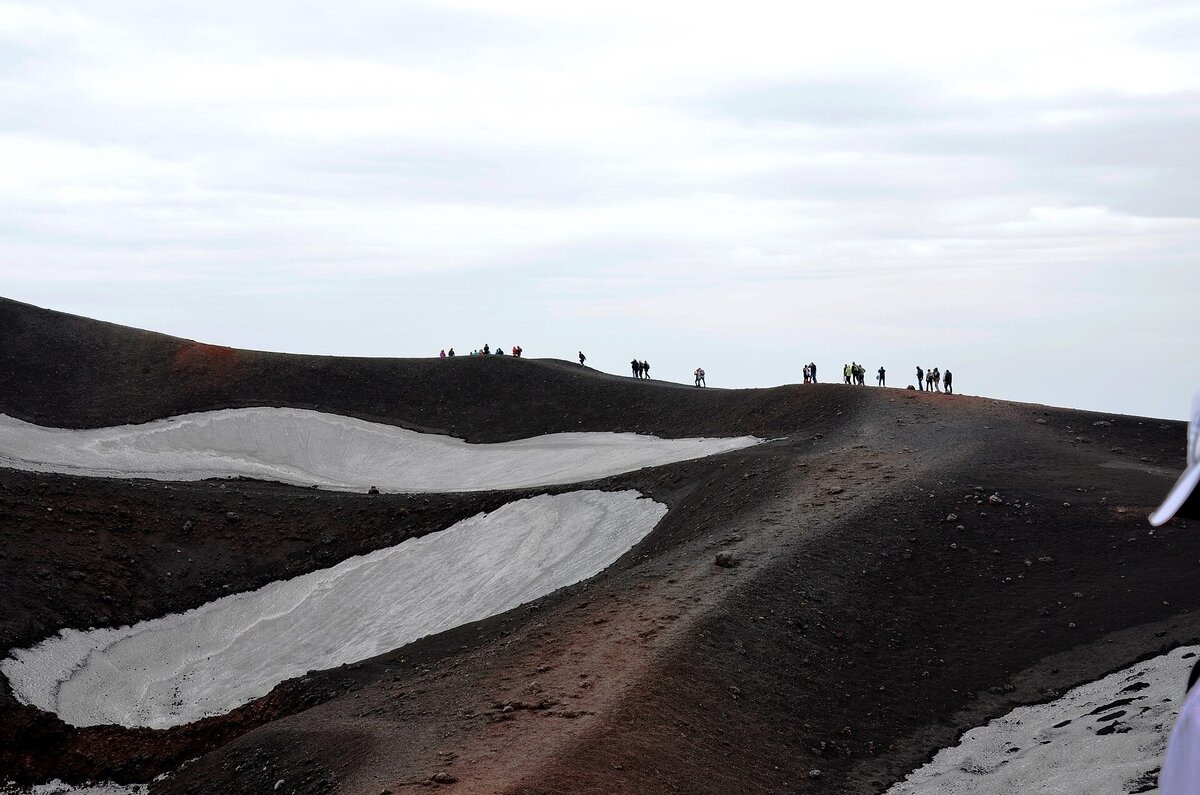
The Crateri Silvestri (free, for everyone). Right next to the Rifugio's square, at about 1,900 metres, are the Crateri Silvestri: two extinct craters born from an eruption in 1892. You walk around them freely, paying nothing and without a guide. You stroll on the black lava sand, peer into the mouth of the crater, see solidified lava flows as far as the eye can see and enjoy a panorama that stretches all the way to the sea. It's a walk genuinely suited to everyone, children included, and for very many visitors it's more than enough to say "I've been on Etna".
The climb to 2,900-3,000 metres (paid). If you want to push higher, towards the area of the summit craters, you need an organised package: first the cable car that takes you to around 2,500 metres, then a 4x4 off-road vehicle and finally a stretch on foot with a compulsory guide. The indicative cost of this complete package is 60-70 euros per person. It's a more demanding and more expensive experience, but the landscape up there is lunar, unreal. You can't go up to the active vents on your own: above a certain altitude a guide is required by law, and it's a rule that protects you.
What to wear and bring on Etna in every season
Here I want to be clear, because it's the number one mistake I see people make. The short answer is this: dress in layers, always, even if it's 35 degrees in Catania.
Up high, above 1,900 metres, the temperature drops by as much as 10-15 degrees compared to the city, and there's almost always wind. Here's the basic list:
- Closed shoes, ideally trekking ones. The lava sand gets in everywhere and the stones are sharp: forget sandals and flip-flops.
- A windbreaker or a windproof shell, even in the height of summer.
- A sweatshirt or a fleece to wear under the jacket.
- Enough water: there are no fountains up there beyond the Rifugio.
- Sunglasses and sunscreen with high protection: at high altitude the sun beats down much harder.
- A cap and, if you go above 2,500 metres, a buff or a light scarf for the wind too.
In winter it's a different story: Etna gets covered in snow and turns into a proper ski resort. In that case you need heavy mountain clothing, gloves and, if you walk off the groomed slopes, crampons.
Fabio's tip
I say it to every guest leaving in summer: even in July, put a sweatshirt and a jacket in your backpack. At the top it's cold and windy, and anyone who goes up in a t-shirt comes back down chilly and disappointed. A few minutes of preparation save your day.
How long does a trip to Etna take and how much does it cost?
It depends on how you set it up. I'll give you the two most common scenarios, so you can do the maths before you go.
A do-it-yourself half day at the Crateri Silvestri. You set off by bus in the morning, walk around the craters, soak up the panorama, grab a bite at the Rifugio and head back in the early afternoon. Total cost: basically just the bus (6-7 euros) plus lunch. Duration: a relaxed day, no rushing. It's the ideal solution if you're on a tight budget or if Etna is just one of the many things you want to do in the city.
A full day with a climb to the summit. To the logistics you add the package of cable car, jeep and guide (60-70 euros). In this case you're looking at a full day and it's best to have a car or a tour, because the public bus timetable might squeeze your timing. Duration: 5 to 7 hours of activity in total.
In both cases, Etna is an excursion you can easily fit into your stay in Catania. If you're building your itinerary, take a look at my guide on what to do in Catania in 3 days: a day dedicated to the volcano fits in perfectly.
Etna and wine: the Etna wineries
There's a side of Etna that many tourists overlook, and for me it's one of the loveliest. The slopes of the volcano are one of the most interesting DOC wine areas in Italy. The volcanic soil, rich in minerals, gives rise to unique wines, above all the Etna Rosso produced from the native Nerello Mascalese grape.
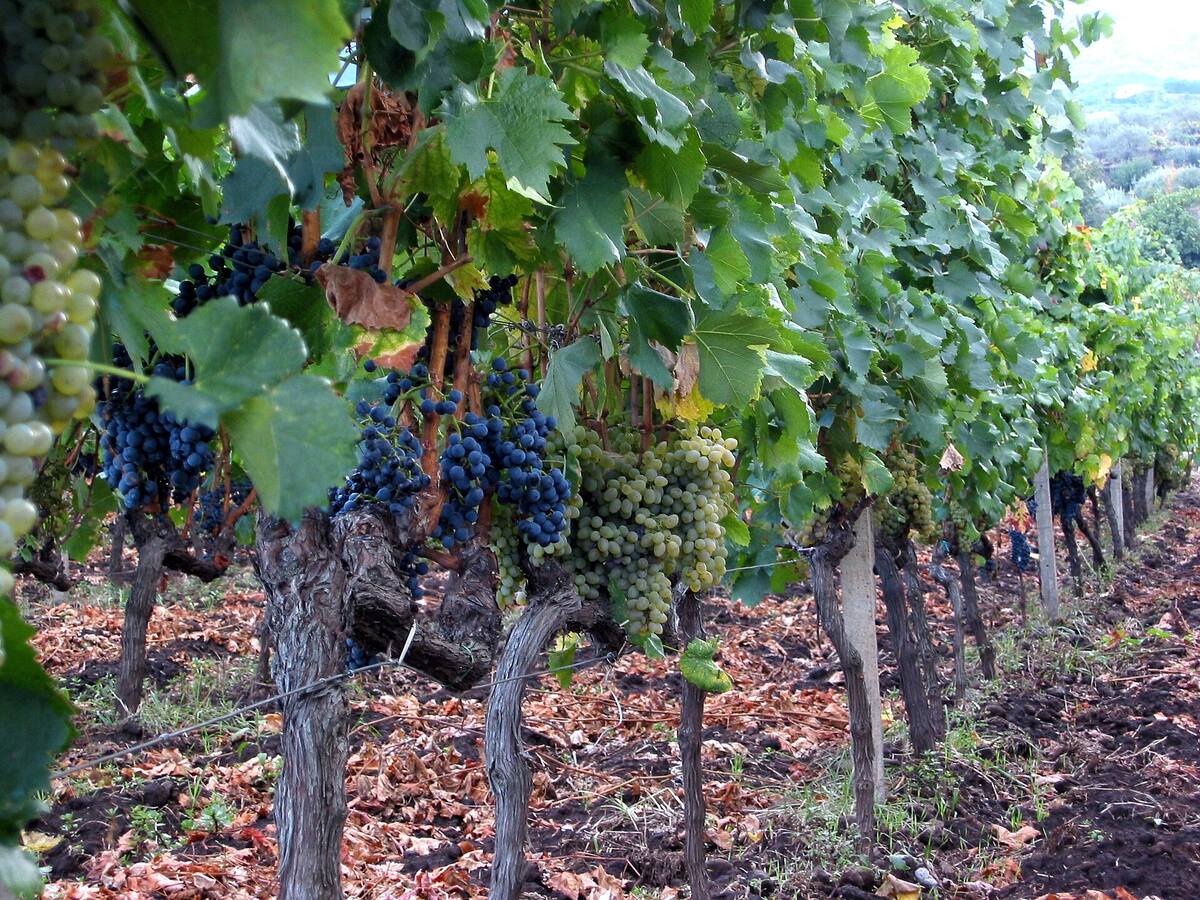
Along the slopes you'll find numerous wineries open to visitors, many with a guided tasting and a tour of the vineyards. My advice is to pair the winery with your return from the excursion: you come down from the cold, windy altitude and find yourself among the vines at sunset, glass in hand and Sicilian flavours on the table. It's the perfect way to round off the day.
If the volcano and the wine have won you over, know that the area has plenty more to offer. When you head back into the city you can keep exploring with my guide on what to see in Catania, or, if you're after some relaxation after the walking, take a look at the beaches near Catania.
Frequently asked questions
Can you climb Etna on your own without a guide?
How much does the Etna excursion cost?
How do you get to Etna from Catania without a car?
Is it dangerous to climb Etna?
What to wear for Etna in summer?
Etna really is within everyone's reach, you just need to show up prepared. Once you've booked your stay at Lavika Loft, just write to me: I'll help you choose the right day and the option best suited to you. Check availability here and start dreaming about your adventure on the volcano.